Your driveway is sunken because the dirt under it gave way. We lift it back to level — usually the same day.
Tell Us What's Sinking
Thank You!
We'll get back to you shortly. For immediate help, call (980) 890-5886.





If your driveway is sunken, cracked, or pooling water, it's time to lift it. Concrete lifting raises the slab without removing it. The soil beneath is what settled, so the repair starts there. A residential concrete driveway is usually four inches thick, which is plenty to lift in one piece.
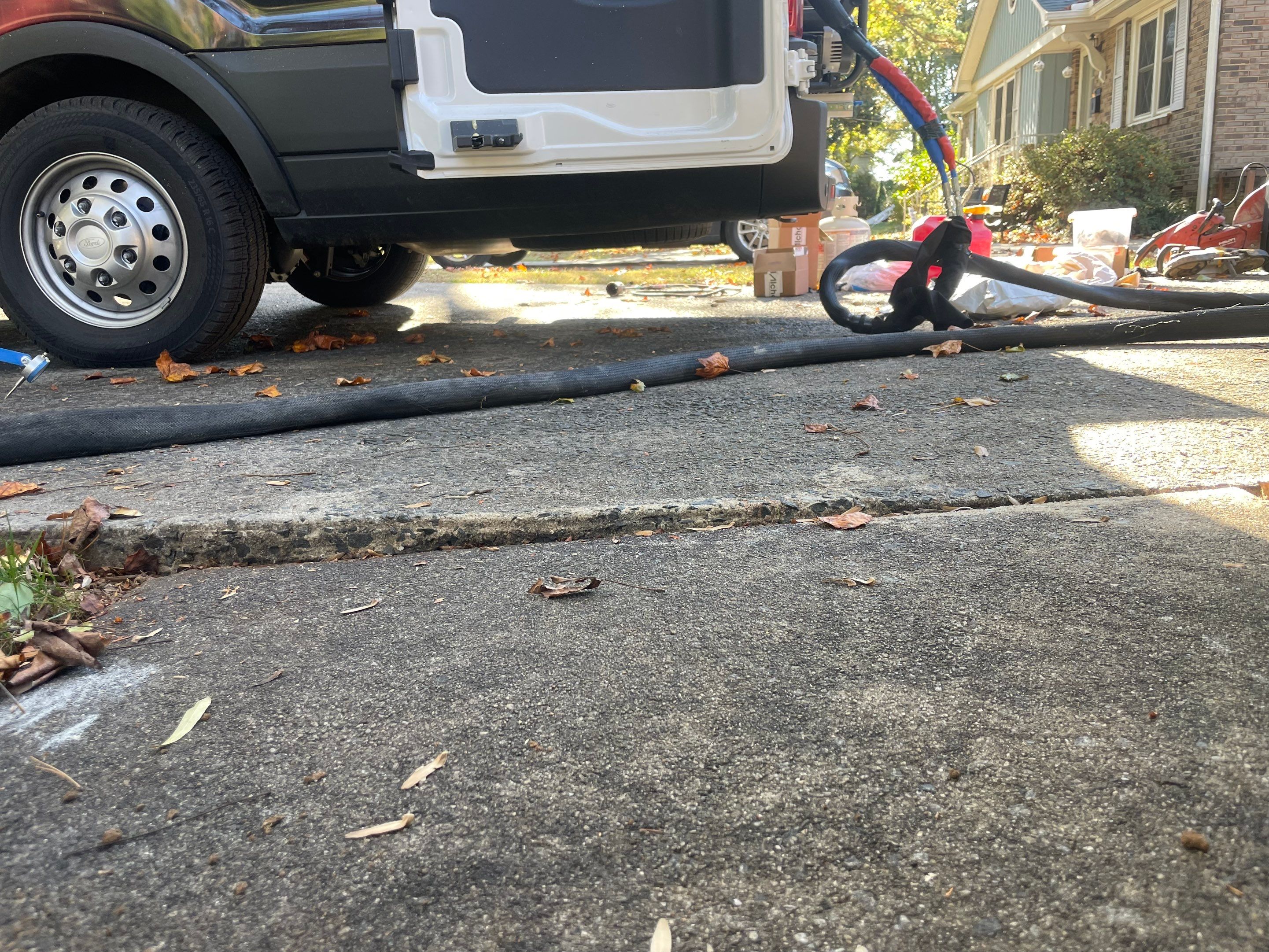
Sections of your driveway have dropped lower than the rest. Cars scrape at the front lip, or there's a clear step where two slabs used to sit flush. A driveway slab that has dropped at a joint is sitting over a void. Concrete lifting fills that void and brings both slabs back to level. Slabs move independently at the joints, so one panel can drop while its neighbor stays put. Concrete lifting treats each panel separately for that reason. A joint that has opened up lets more water into the soil below.
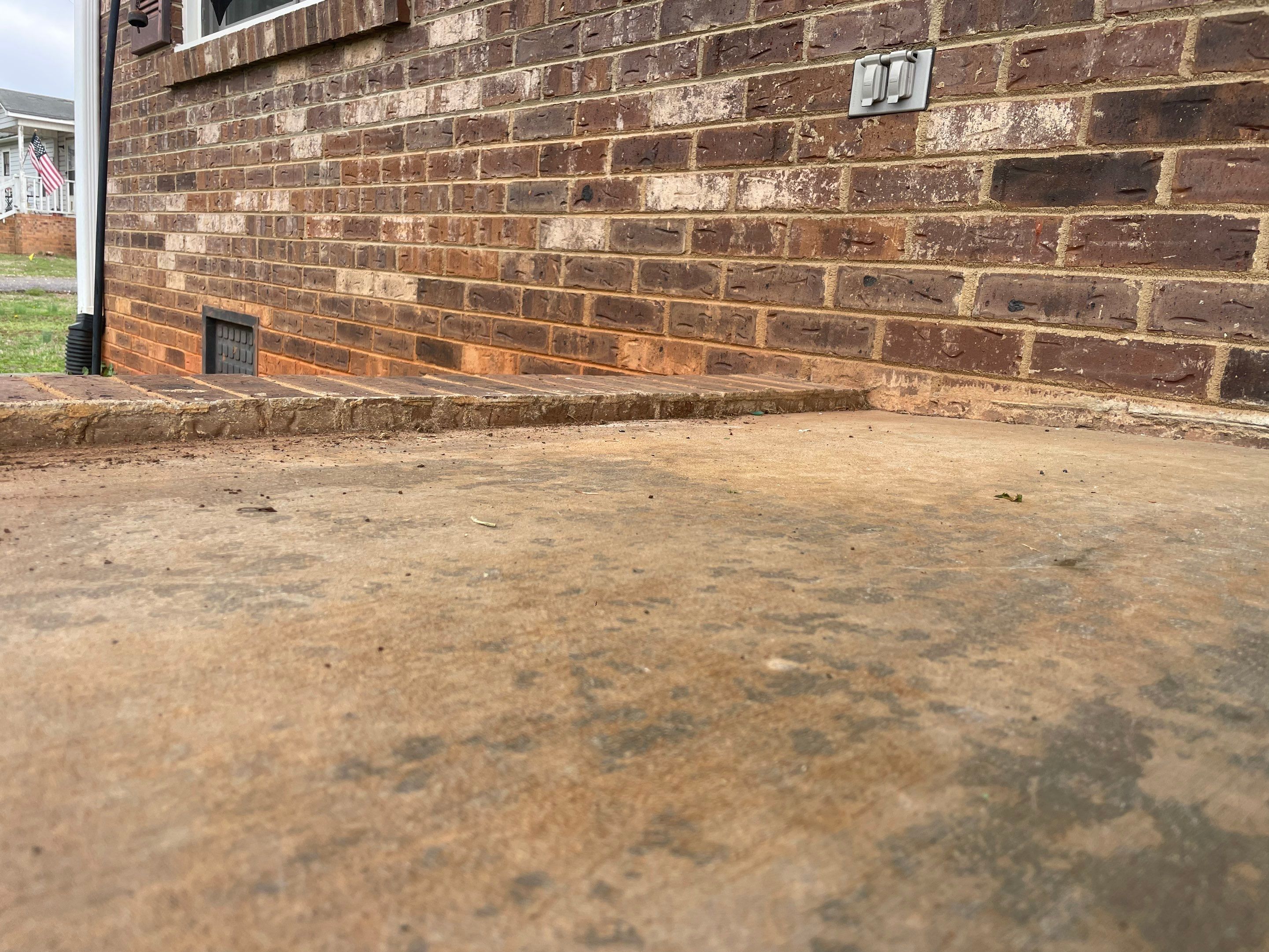
One slab sits higher than the next at the joint. Anything over a quarter inch is a trip risk for kids, guests, or anyone walking through. A lip of half an inch is enough to catch a toe. Raising the low side is a smaller repair than replacing the panel. Concrete lifting removes the lip rather than grinding it down. Concrete leveling is the cheaper fix at this stage.
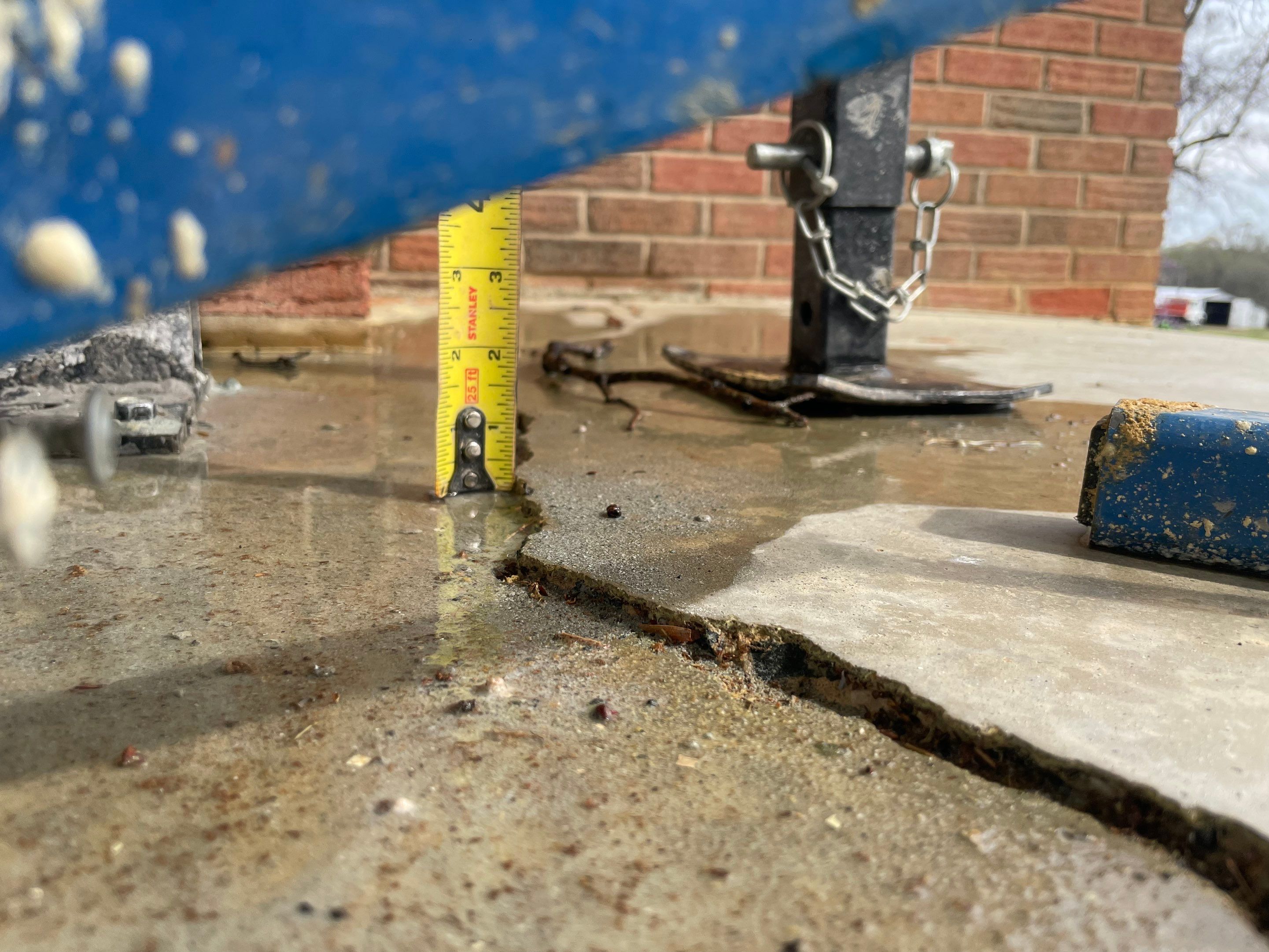
Cracks running across the surface, or new ones that keep growing. The slab isn't broken — but the dirt under it is washing out and the surface is splitting. Driveway cracks usually follow the settlement rather than cause it. Cracked concrete that is still sound lifts perfectly well. Cracked panels are sealed after the lift, not before. Concrete leveling stops the splitting from getting worse.
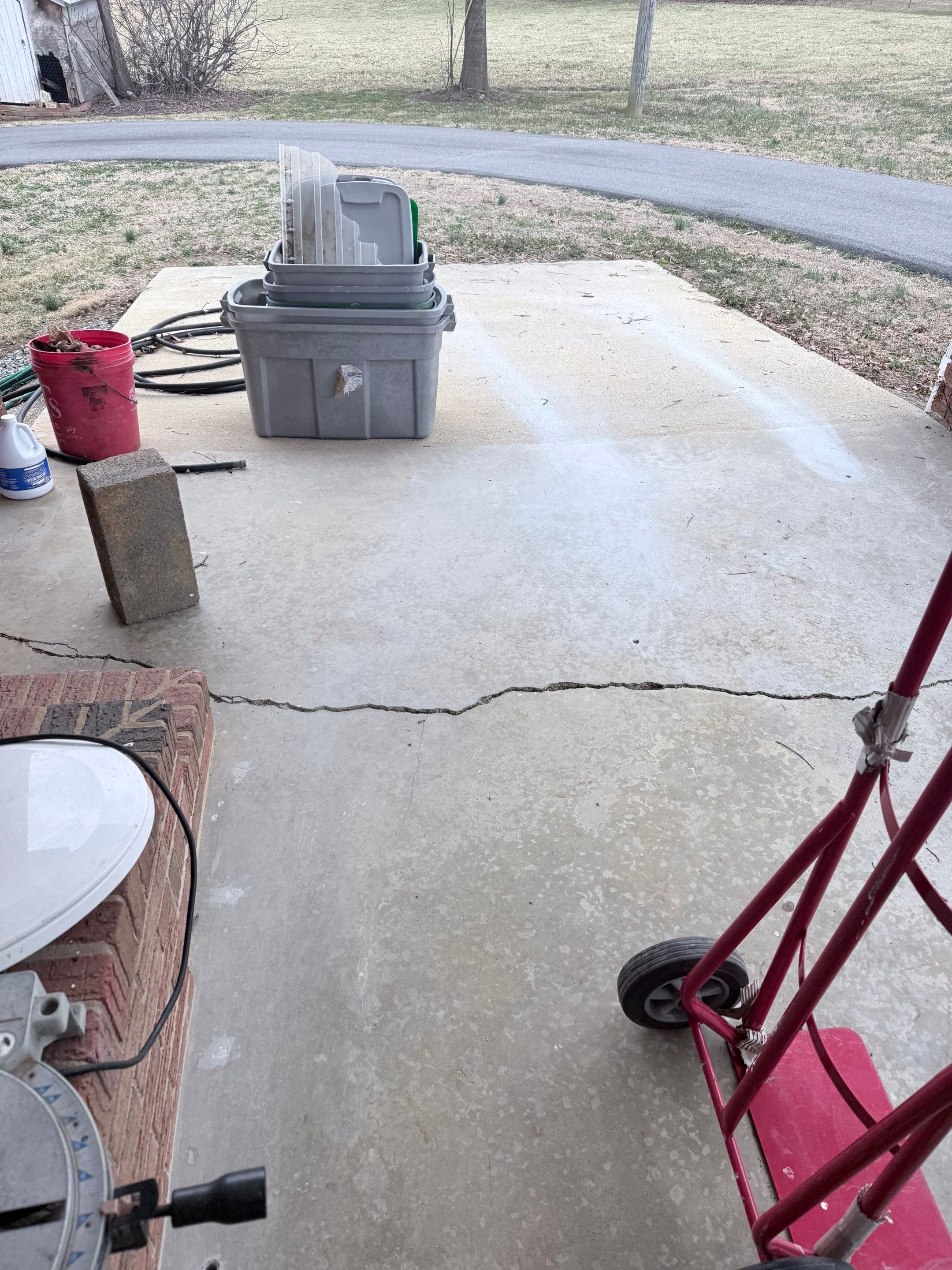
Puddles that sit on your driveway hours after a storm. Water draining the wrong way — back toward your house instead of out to the street. Water running the wrong way keeps washing out the soil underneath. We fix the drainage as part of the repair so the concrete does not sink again. A downspout emptying beside the slab will undo any repair that ignores it. Concrete leveling and a drainage correction usually go together.
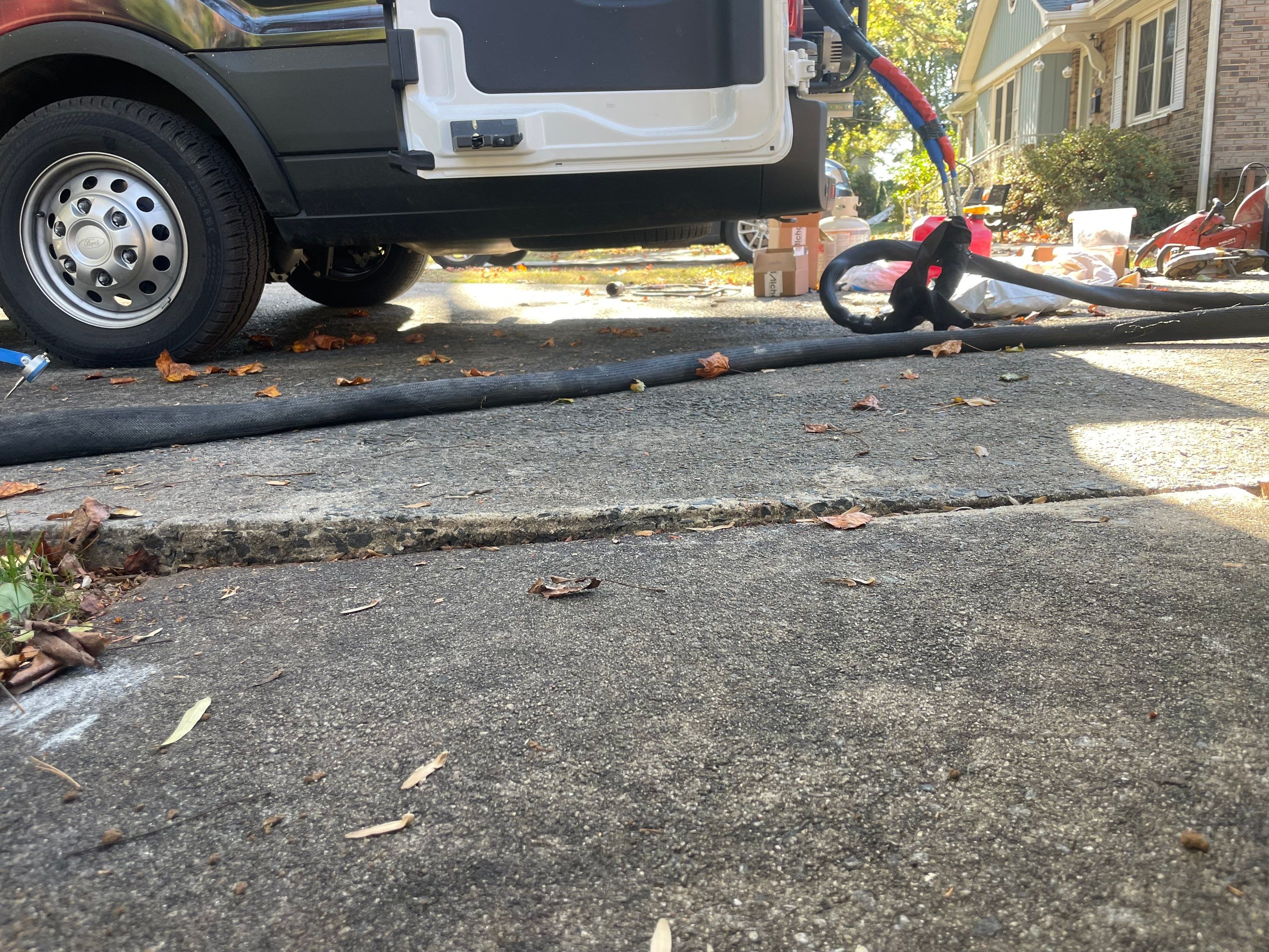
Driveway leveling fixes a sunken driveway without ripping it out. We drill small holes in the slab, pump foam or mud into the voids underneath, and lift the concrete back to grade. Most of the time you save about half the cost of replacement and skip a week of disruption. A concrete driveway that is intact almost never needs replacing. Concrete leveling costs a fraction of a tear-out and the slab is usable the same day. Concrete leveling also keeps the color and finish you already have. Replacing an intact driveway is almost always the more expensive answer.
The section where your driveway meets the street is usually the first to settle. Cars scrape, water pools, and the lip gets worse every season. We lift it back flush with the road, often in under an hour. The apron is the section that settles first because it carries the most traffic. Polyurethane injection lifts it back flush without touching the road. The approach section takes the heaviest load on the whole driveway.
When the slab right at your garage door drops, the door stops sealing. Water runs into the garage on rainy days. We raise that section back to the threshold so the door closes tight again. A garage entry that has dropped at the threshold needs only a small lift. Concrete lifting here is measured in fractions of an inch. Getting that edge back to level stops water running into the garage. Polyurethane is precise enough for a lift that small.
A lip between two slabs over a quarter inch is enough to catch a foot. We lift the lower side to match — fast, clean, and the patch blends in once it weathers. Holes are about the size of a penny and get filled flush. Nothing about a professional repair should be obvious afterwards. Professional patching uses a matched grout rather than plain mortar. Concrete lifting leaves almost nothing to see afterwards.
Our Process
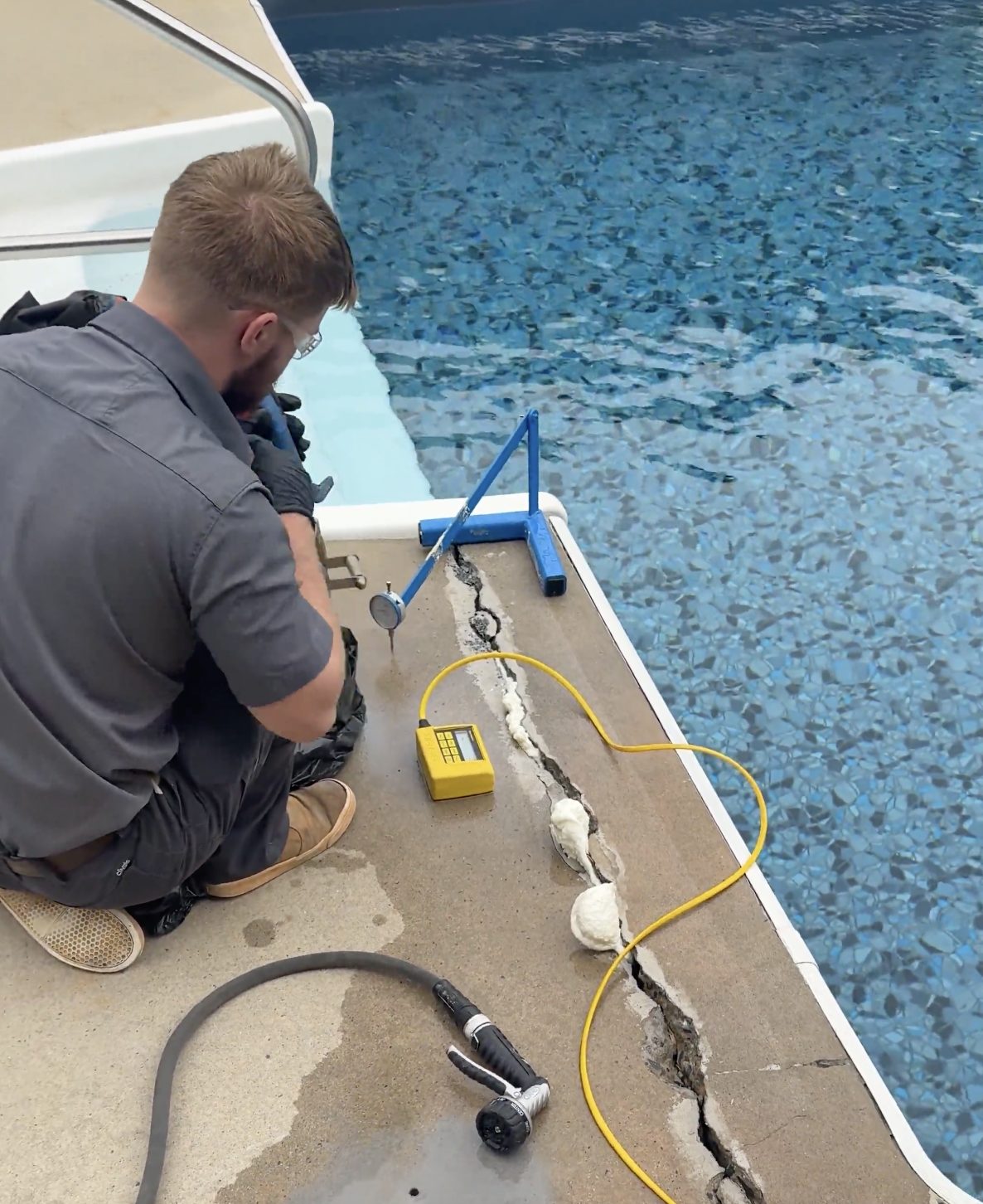
We come out, walk your driveway, measure the drop, and find out why it's sinking. Takes about 15 to 30 minutes. The inspection measures the drop at several points and checks the soil. That is what decides between the two methods. The inspection is free and it produces a number, not an opinion. We check the concrete for hidden voids at the same time. Concrete leveling is quoted from that measurement, not from a guess.
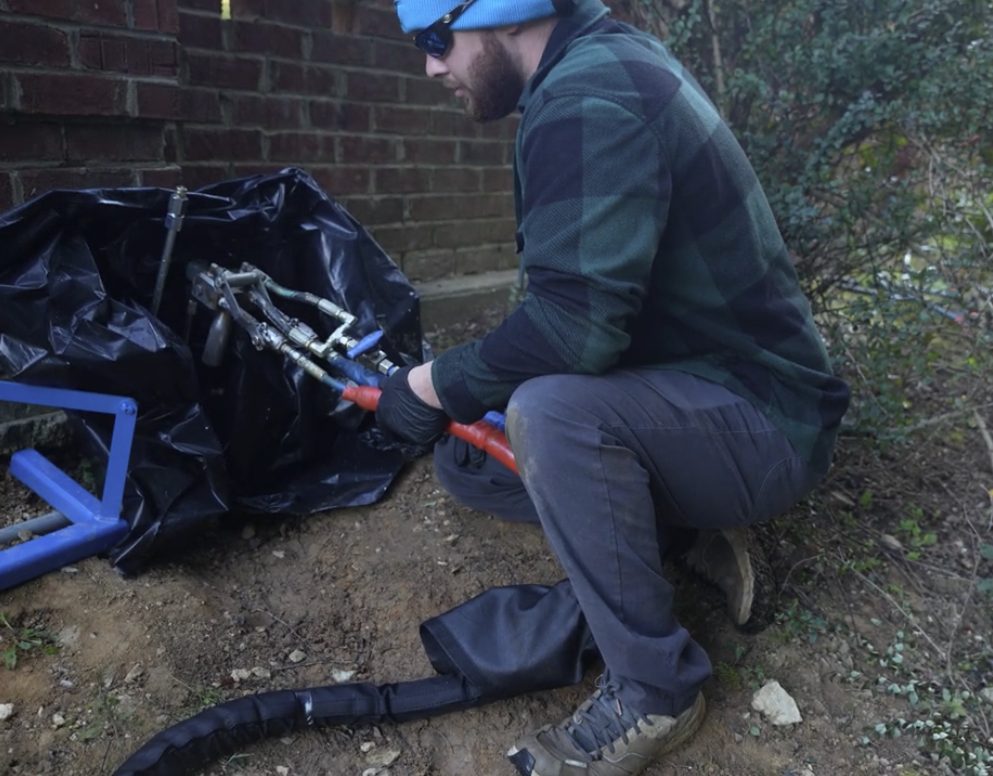
We pick foam or mud based on your soil, your budget, and the warranty you want. We tell you straight what each one will and won't do. Polyurethane is light, waterproof and sets in minutes. Mudjacking uses a heavier slurry and costs less where speed does not matter. Polyurethane expands to fill every void; mud fills the large ones. Concrete leveling works with either material once the void is filled.
We drill small holes, pump material under the slab, and watch it rise. The lift stops the moment your driveway is back to grade. Concrete leveling is done in small increments so nothing cracks on the way up. We stop at level rather than guessing. Raising a slab too fast is how people crack concrete they meant to save. Concrete lifting is a controlled process, not a single push.
We fill the holes with a color-matched patch and clean up. With foam, you can drive on it the same day. With mud, give it 24 hours. Polyurethane reaches full strength in about fifteen minutes. That difference is the main reason most driveways get polyjacking rather than mud. Polyurethane is also unaffected by water once it has set.
We move fast. Most driveway leveling jobs are done in a single visit — usually two to four hours. Same-day service is real, not a marketing line. Concrete lifting is a same-day repair on most driveways. There are no forms, no pour and no cure week. Most concrete driveway repairs here are booked and finished inside a week. A concrete repair booked in the morning is often finished by lunch.
We give you the price before we start, and that's the price. No mid-job upcharges. If foam isn't the right call for your driveway, we'll tell you. If mud is the better fit, we'll save you the money. Mudjacking is the cheaper of the two methods on a driveway that is not in a hurry. We say so when it applies. Neither method is universally better. The slab and the soil decide.
You get a written warranty in your hand at the end of the job. The lift holds. The slab stays where we put it. If it doesn't, we come back and fix it. A professional lift holds as long as the soil under it stays put. That is why the drainage gets addressed at the same time. Concrete lifting is warrantied because the material does not wash out or shrink.
We drill small holes in the sunken section, pump foam or mud underneath, and lift the slab back to its original level. The fill material locks into the voids that caused the slab to drop. Most jobs are done in a few hours. Concrete lifting on a two-car driveway is typically a morning. Replacing it is a week of disruption and a much larger bill. Sinking that started years ago still lifts in an afternoon. Concrete leveling rarely runs past a single visit. Concrete lifting on an older driveway takes no longer than on a new one.
Foam injection typically lasts 20+ years on a stable base. Mudjacking lasts 5 to 10 years on dry, well-drained soil. The lift holds as long as the underlying cause — usually drainage — is also fixed. Sinking that keeps returning means the soil was never stabilized. Concrete leveling on its own will not outlast a drainage problem. Regrading beside the slab is often the cheaper half of the repair.
Neither is always better. Foam is best when there's water under the slab, when you want small holes, and when you need a long warranty. Mud works for dry soil and larger areas where you want to save money. We'll tell you which one fits your driveway after we walk it. Polyjacking suits soft ground because the material adds almost no weight. Mudjacking suits a slab that simply needs mass beneath it. Access matters too, since a mudjacking rig needs more room than a hose. The concrete tells us more than the brochure does.
If the slab is intact and the cracks are under half an inch, leveling fixes it for about half the cost of replacement. If the slab has broken into multiple loose pieces or has cracks wider than half an inch, replacement is the right call. We'll be straight with you on which one your driveway needs. Both methods work by injecting material under the slab rather than over it. Neither one replaces the concrete you already own. We show you the injection points before any concrete lifting starts. Concrete leveling is quoted per driveway, after we have walked it.
Most residential driveway leveling jobs take two to four hours from start to finish. With foam injection, you can drive on it the same day. With mudjacking, give it 24 hours before driving. Polyurethane sets quicker than that and takes traffic the same afternoon. Either way the concrete is back in service far sooner than a replacement. The repair is finished long before a replacement would even start.
Rapid Concrete Leveling provides driveway leveling across the markets we serve. Click your city for local crew details.