Sunken slab lifted back to level — same day in most cases. Honest price before we start. No replacement when lifting works.
Tell Us What's Sinking
Thank You!
We'll get back to you shortly. For immediate help, call (980) 890-5886.





If any of these sound like your slab, you probably need it lifted before it gets worse. Polyurethane foam fills the space underneath and raises the concrete back into position. The soil is what gave way, so that is where the repair starts. Foam expands to fill every void rather than only the large ones. Foam is the fastest of the repairs we offer.
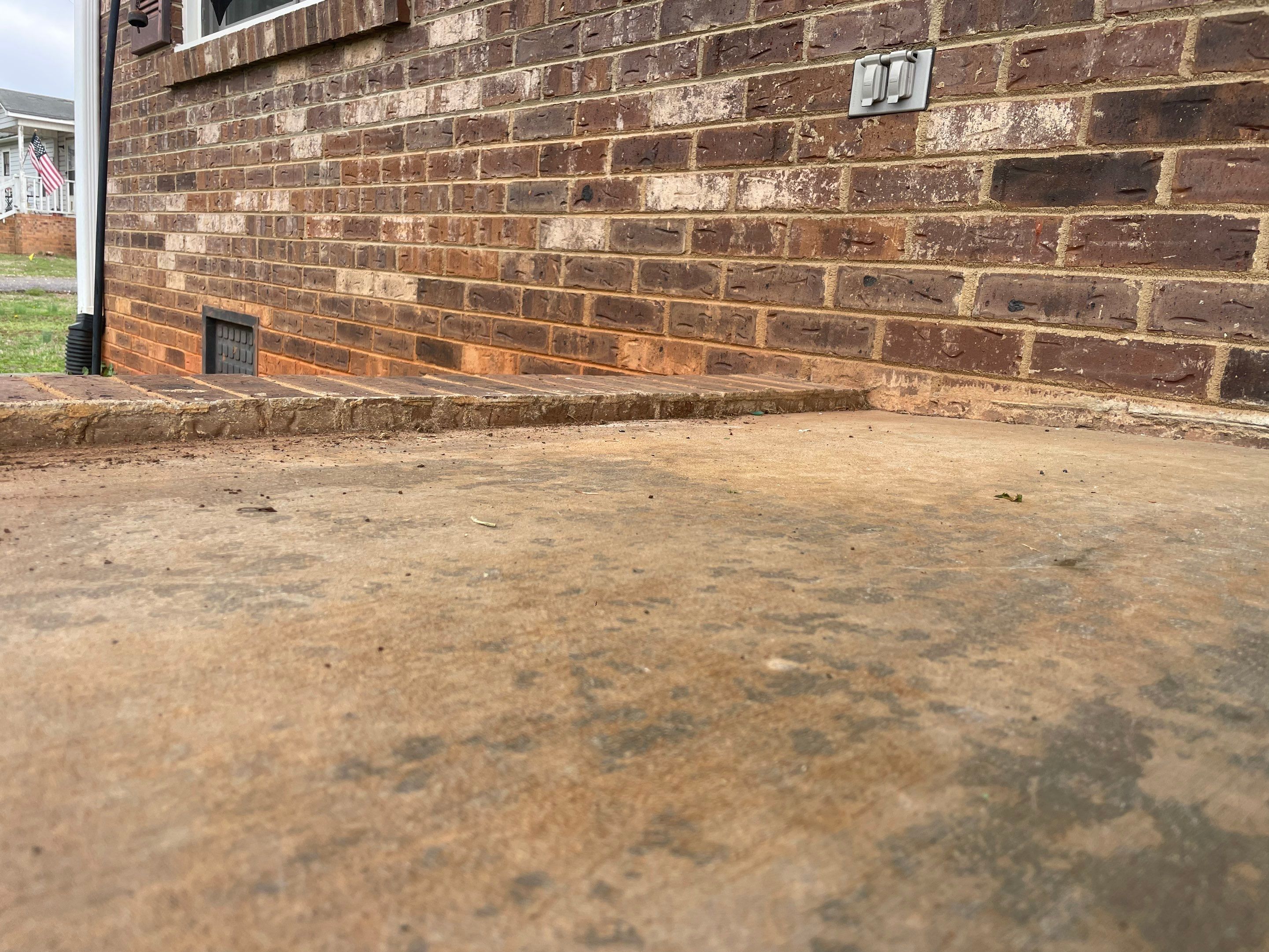
Your basement floor or sunroom slab has dropped, and there's a gap where the slab meets the foundation wall. Water sneaks in every time it rains. A gap along the wall means the soil has pulled back from the edge. Foam injection closes it without opening the ground up. Wet soil beside a slab keeps eroding until something fills the gap. Foam seals as it expands, so the soil beside it stays drier.
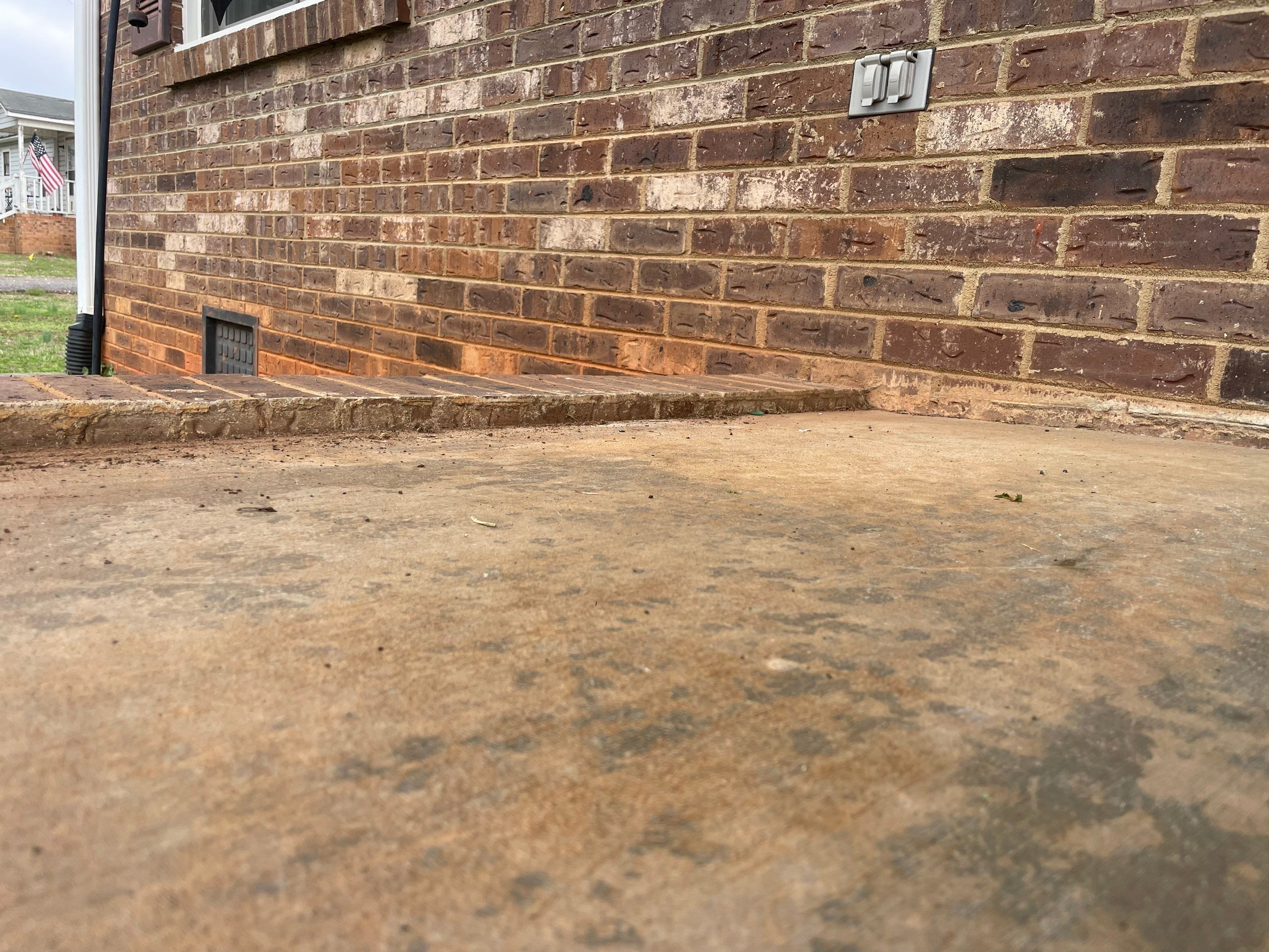
A door that worked fine last year now scrapes the floor or won't close all the way. The slab moved, the frame shifted, and the door followed. Doors are usually the first thing anyone notices. By then the concrete has already moved a measurable amount. Soil movement under one corner is enough to do it.
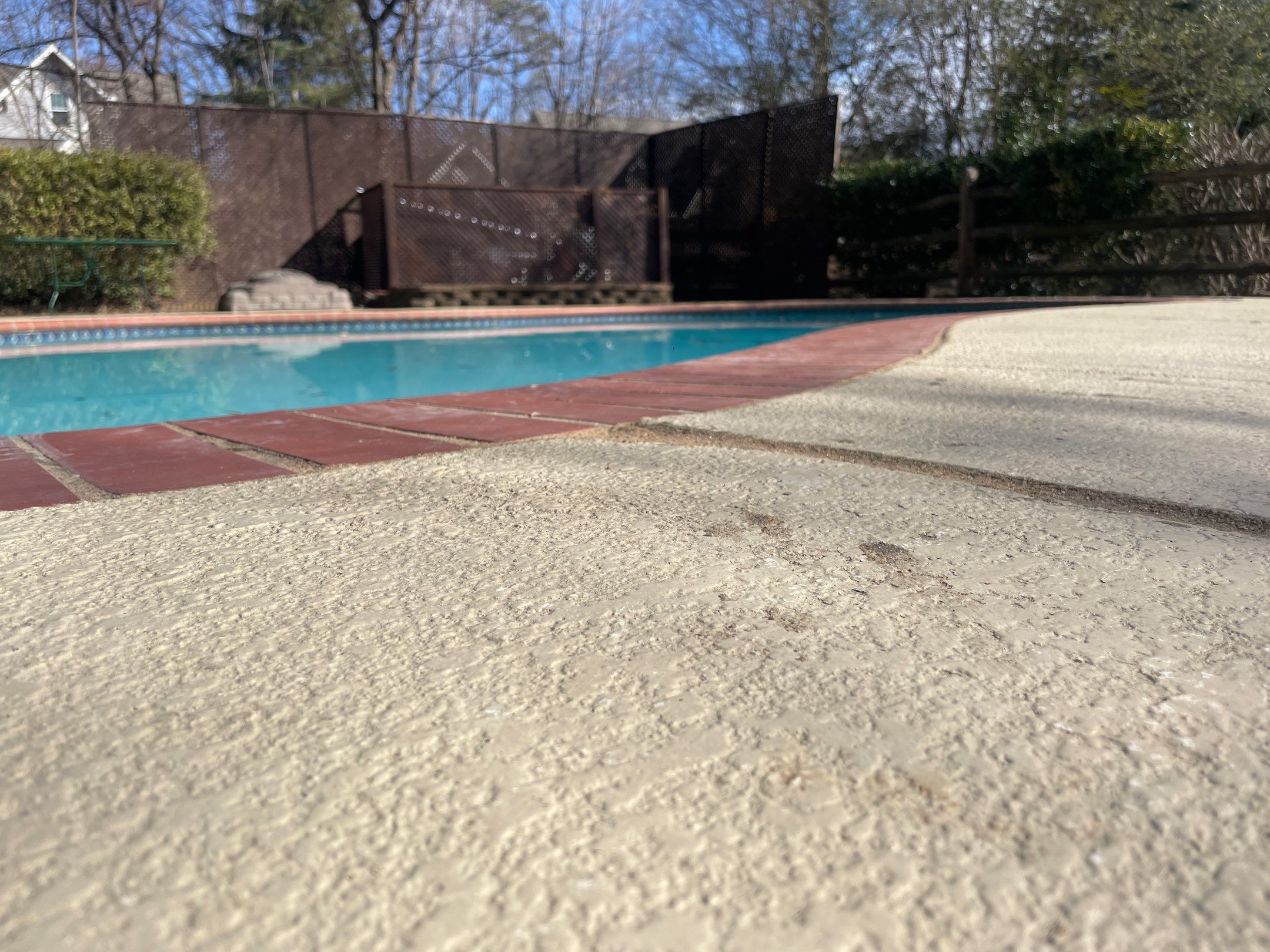
One section of concrete sits a quarter-inch or more below the next. People stub toes on it. Anything over that height is a real trip hazard. Bringing the low side up removes it outright rather than grinding the edge down.
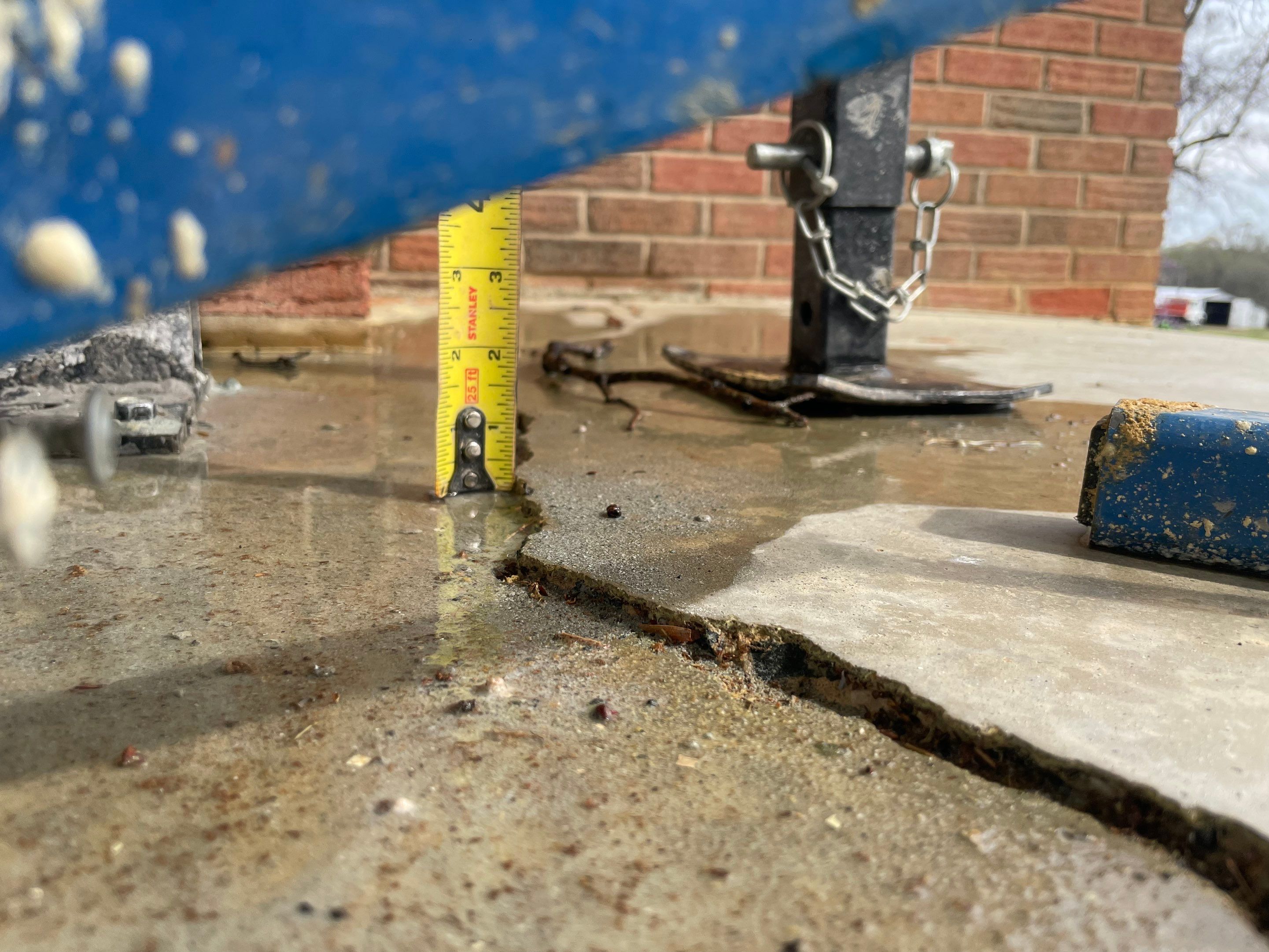
You tap the slab and it sounds like a drum. That hollow sound means the dirt under it is gone and the slab is sitting on a void. A hollow sound is the clearest sign of a void. Filling that space early is the cheapest repair on this whole page. Foam finds the whole cavity, which is why hollow slabs respond so well. Jacking a hollow area is cheaper than waiting for it to crack.
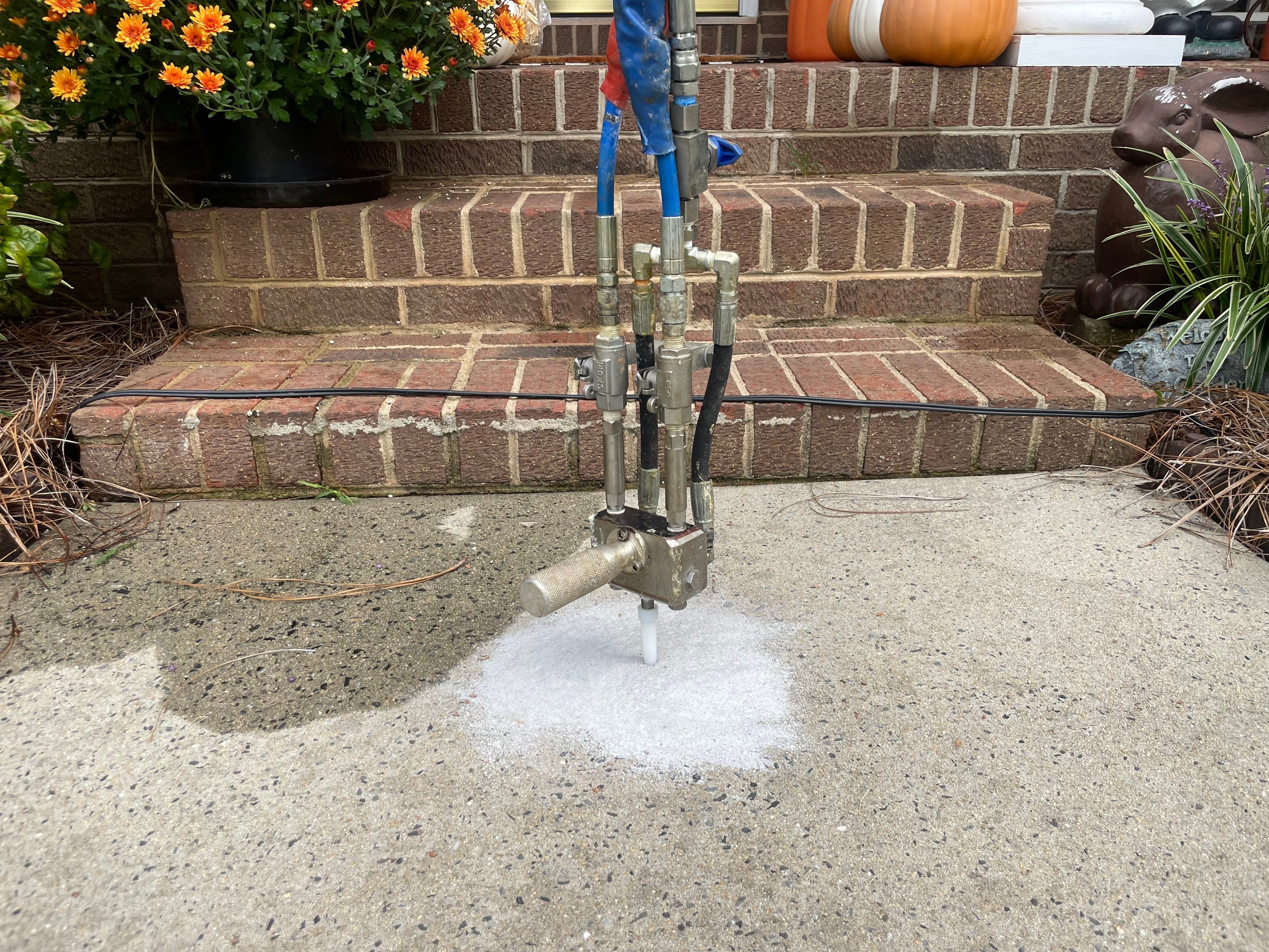
Concrete slab lifting raises a sunken slab back to its original height. Your slab is fine. The dirt under it isn't. We drill small holes, pump material underneath, and the slab rises back into place. You walk on it the same day. Polyurethane sets in about fifteen minutes and takes weight right away. The equipment fits through a standard yard gate.
We handle every type of sunken slab — basement floors that pulled away from the wall, sunroom slabs that dropped from the house, garage floors that dipped in the corner, interior slabs in slab-on-grade homes, and porches that scrape the door now. Slabs of almost any size respond to the same injection method.
Two-part foam injected through dime-sized holes. It expands in seconds, fills the void, and lifts the slab. Cures in about 15 minutes. Lightweight, waterproof, and lasts the longest of any method. Foam is waterproof and will not wash out of wet soil. That is what makes it longer-lasting than the alternatives. Foam also adds almost no weight to soil that has already failed. Polyurethane holds its volume for decades.
A cement and soil slurry pumped under the slab through larger holes. Lower price, works well on big outdoor slabs, but heavier and shorter-lived than foam. We use it when it's the right call — not as our default. Mudjacking still has its place where the ground simply needs mass beneath it and speed does not matter. Mudjacking uses heavier material and a larger hose.
Sometimes the slab hasn't dropped much yet, but there's already a void underneath. We fill it before the slab fails. Same process, no full lift needed. Void fill uses the same equipment and the same foam, just less of it. A partial lift on a small area is often a single-hour job. The same foam and the same equipment handle both jobs.
Our Process
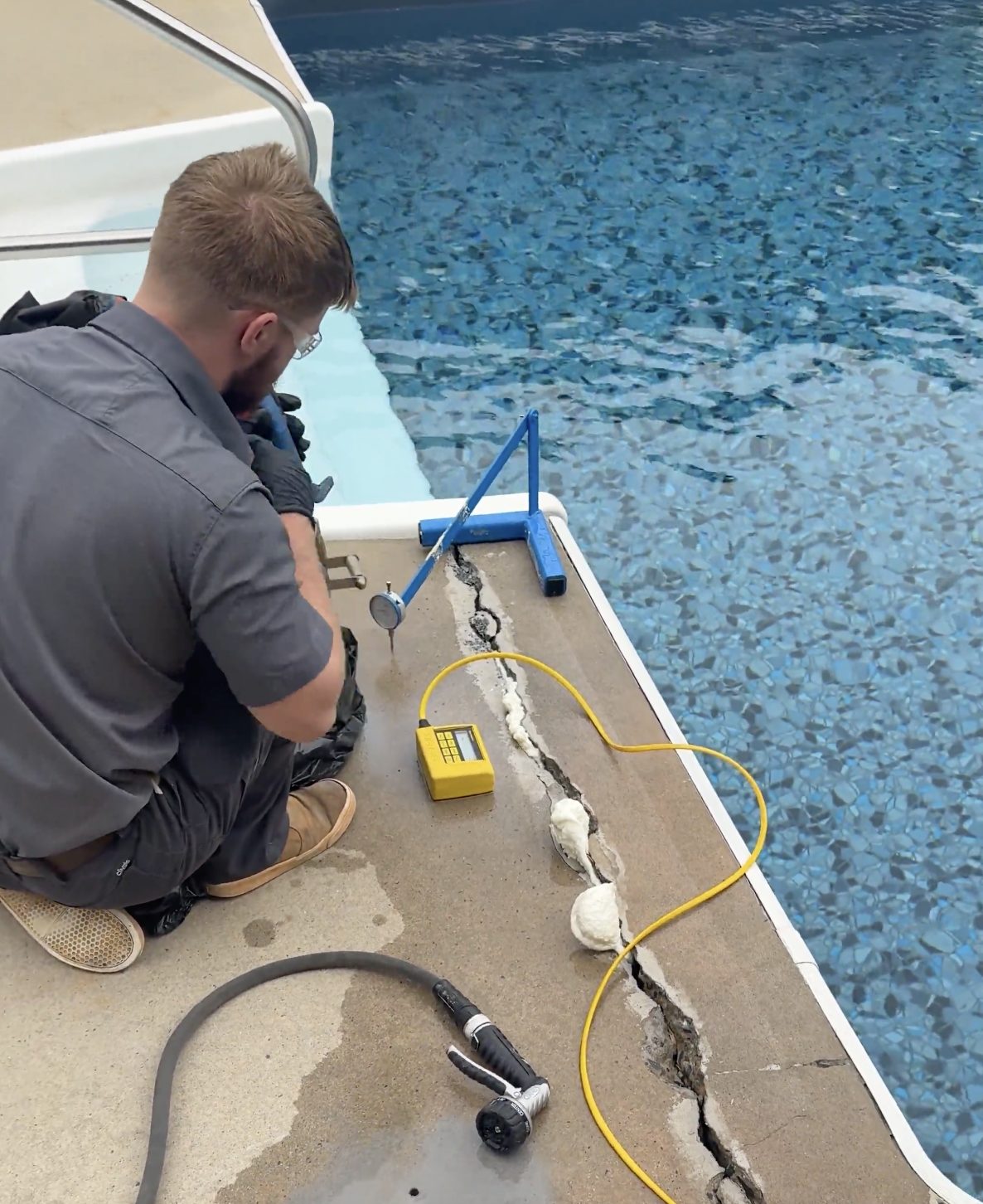
We come out, walk the slab with a level, find the dip, and check what caused it. You get a written price before we drill anything. The assessment is free and the number we quote is the number you pay. We check the soil conditions at the same time.
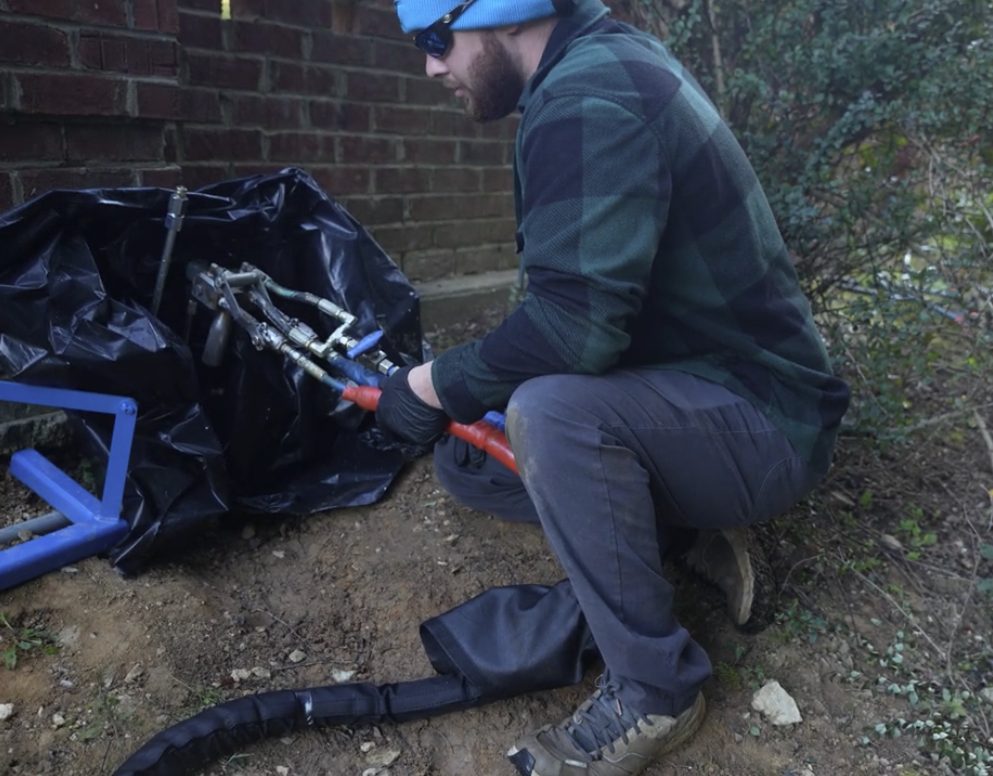
Holes are dime-sized for foam, slightly larger for mud. They go in a planned pattern so the slab lifts evenly — not in one spot. Injection points are spaced so the load spreads across the whole slab rather than concentrating. Foam pressure is monitored the whole way up. Soil below is compacted by the foam as it expands.
We pump material underneath in small amounts. The slab rises while we watch the level. We stop the second it's where it needs to be. Raising happens in small steps so the concrete does not crack on the way up. Foam gives us that control; heavier material does not.
Holes get patched with cement mortar. We sweep up. With foam, you walk and drive on it the same day. Grout closes every hole flush with the surface before we leave. Grout matches the surrounding concrete closely once it cures.
We don't push replacement when lifting works. Replacement costs two to three times more and takes days. Lifting fixes the same problem in hours. If your slab can be lifted, we'll lift it. If it can't, we'll tell you that too. Some concrete is broken beyond saving, and lifting it would waste your money.
The price you see is the price you pay. We give you a written quote before we start. No change orders, no upsells once we're on site, no surprise charges at the end. The number we wrote down is the number you sign for. Our services are priced per slab, after we have seen the soil conditions.
Most jobs are done the same day. We don't book you out three weeks. We don't disappear after the quote. Foam cures in 15 minutes, so by the time we leave, your slab is ready to use. No heavy equipment sits on your property overnight. Our services cover concrete of every size on a property.
Foam lifts hold 5 to 20 years or longer in most cases. Mudjacking holds 2 to 5 years before the slurry can wash out. The biggest factor is what caused the slab to sink — if water keeps running under it, even the best lift won't last. Fix the water source and the lift holds. Soil stabilization matters more than the material itself on ground that keeps washing out. Grout at the surface is the last step either way.
Polyjacking uses lightweight polyurethane foam through small holes. It cures in 15 minutes and lasts longer. Mudjacking uses a heavier cement slurry through bigger holes and takes a day or two to cure. Foam costs more up front. Mud is cheaper but doesn't last as long. We explain both before you pick. Polyurethane costs more per unit and less over the life of the repair. Polyurethane is the usual choice where soil stays wet. The older method remains the budget option on stable soil.
Yes — usually 50 to 70 percent less. Replacement means demo, haul-off, new pour, and waiting for it to cure. Lifting keeps the slab you have and just fixes what's underneath. Same outcome, lower cost, and you don't lose use of the area for days. Concrete lifting of this kind is measured in hours, not days. That is the practical advantage of foam over the older method.
We lift in small amounts and watch the level the whole time. The second the slab is back where it should be, we stop. Slabs that crack during lifting are usually slabs that were already cracked before — and those we tell you up front to replace, not lift. Slab jacking cannot fix concrete that has already broken into separate pieces.
Sometimes. Hairline cracks lift fine. A slab broken into several pieces lifts unevenly because each piece moves on its own. If lifting won't give you a clean result, we'll tell you. Concrete crack repair covers the cracks that don't need a lift. Replacement is the right call in worse cases — and we'll say so instead of taking your money. Crack injection is sometimes the better answer on its own. Lifting concrete only makes sense when the concrete is worth keeping.
Rapid Concrete Leveling provides concrete slab lifting across our service area. Click your city for local crew details.