Lift your sunken garage floor back to level — same day. No tear-out, no surprises.
Tell Us What's Sinking
Thank You!
We'll get back to you shortly. For immediate help, call (980) 890-5886.





The slab isn't broken. The dirt under it gave way.
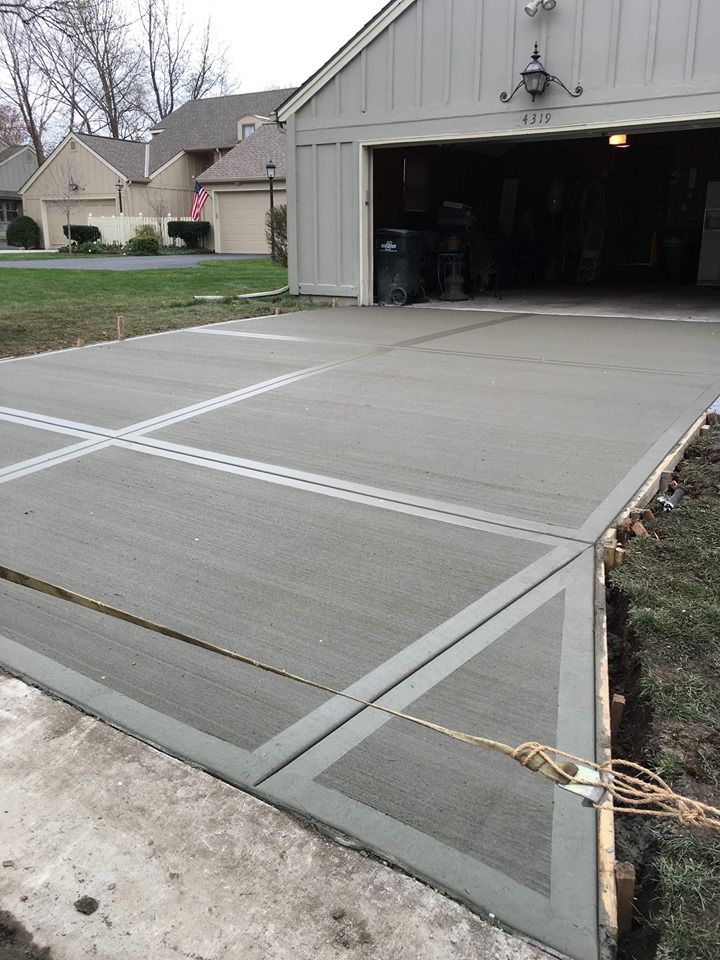
Your car sits at a lean. A ball or a wrench rolls toward one corner and won't stop. The slab dropped on that side because the soil under it washed out or compacted. Concrete settles because what is under it moves. Raising the garage floor without treating the soil only buys time. A garage floor sits on fill more often than people realize, and fill settles.
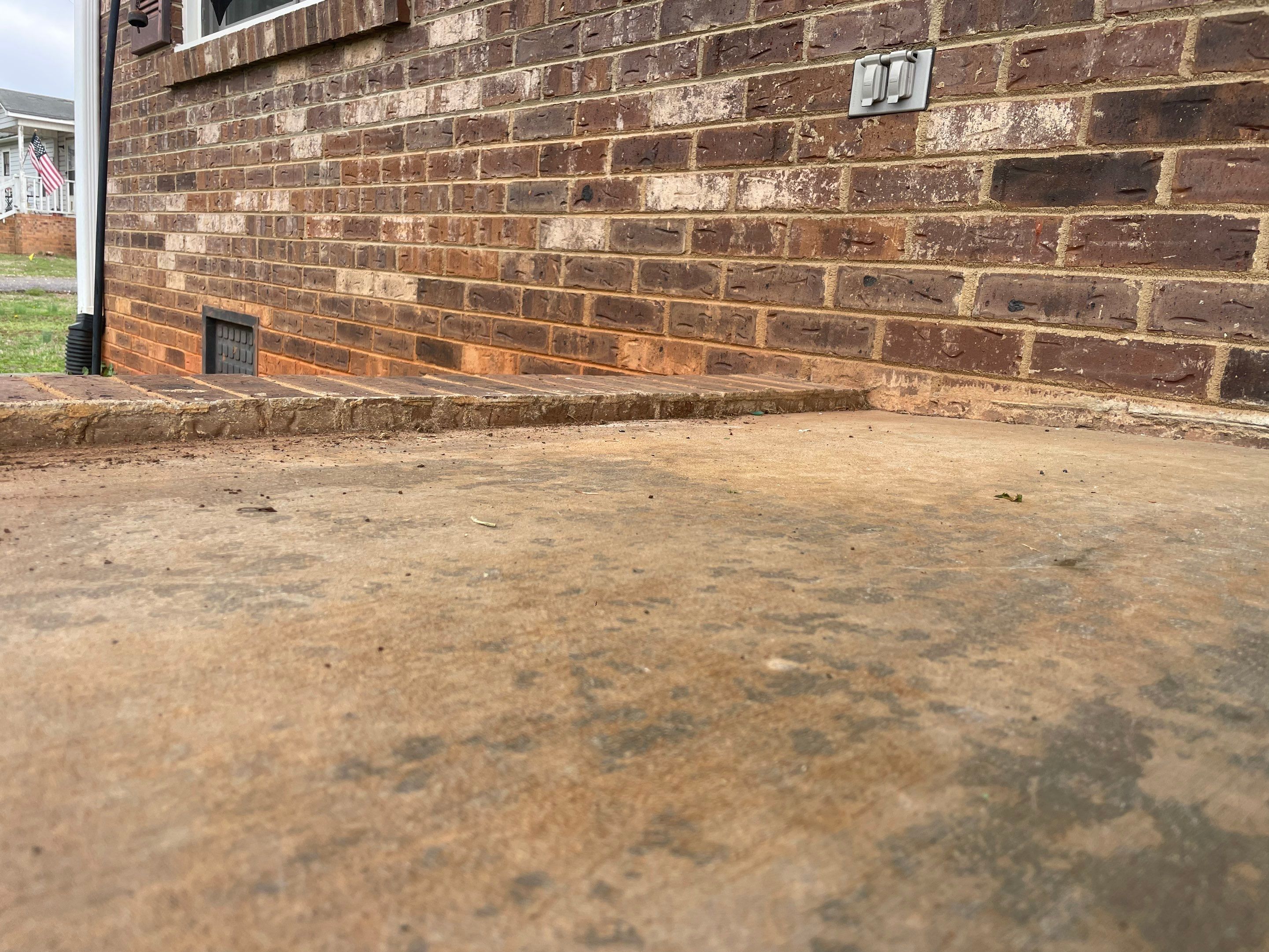
A gap under the rubber bottom seal where water, leaves, or critters get in. The door is fine — the floor dropped away from the door track. A gap at the threshold lets water and weather straight in. Getting the concrete back to level closes it. Water running in at that point undermines the concrete further every winter.
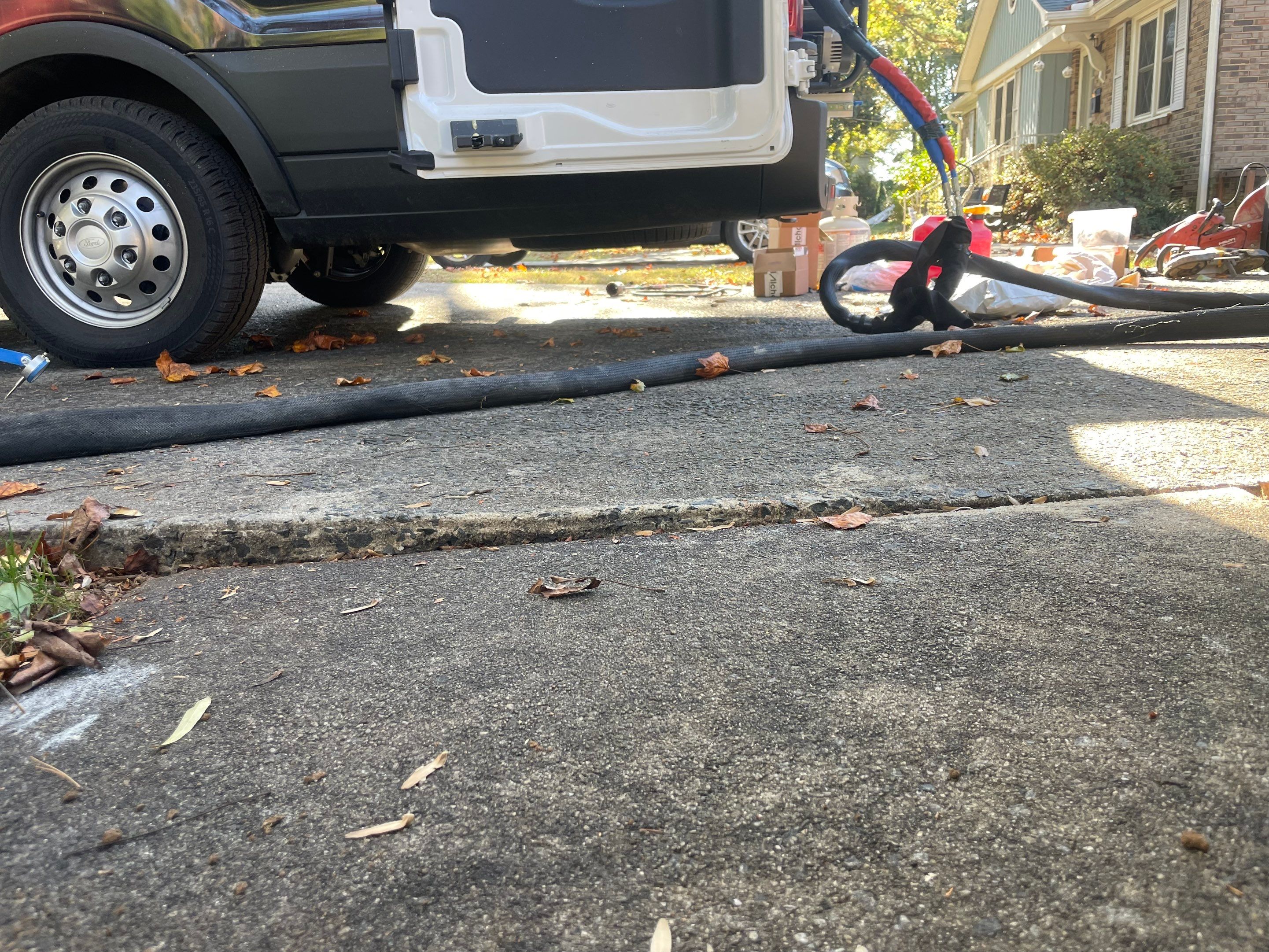
A step or lip between the driveway apron and the garage floor. A quarter inch is enough to catch your foot, jam a wheelbarrow, or stop a motorcycle wheel. A raised edge across a garage floor is the most common complaint we get. Leveling the surface removes the lip entirely rather than grinding it flat. A level garage floor is also easier to keep clean.
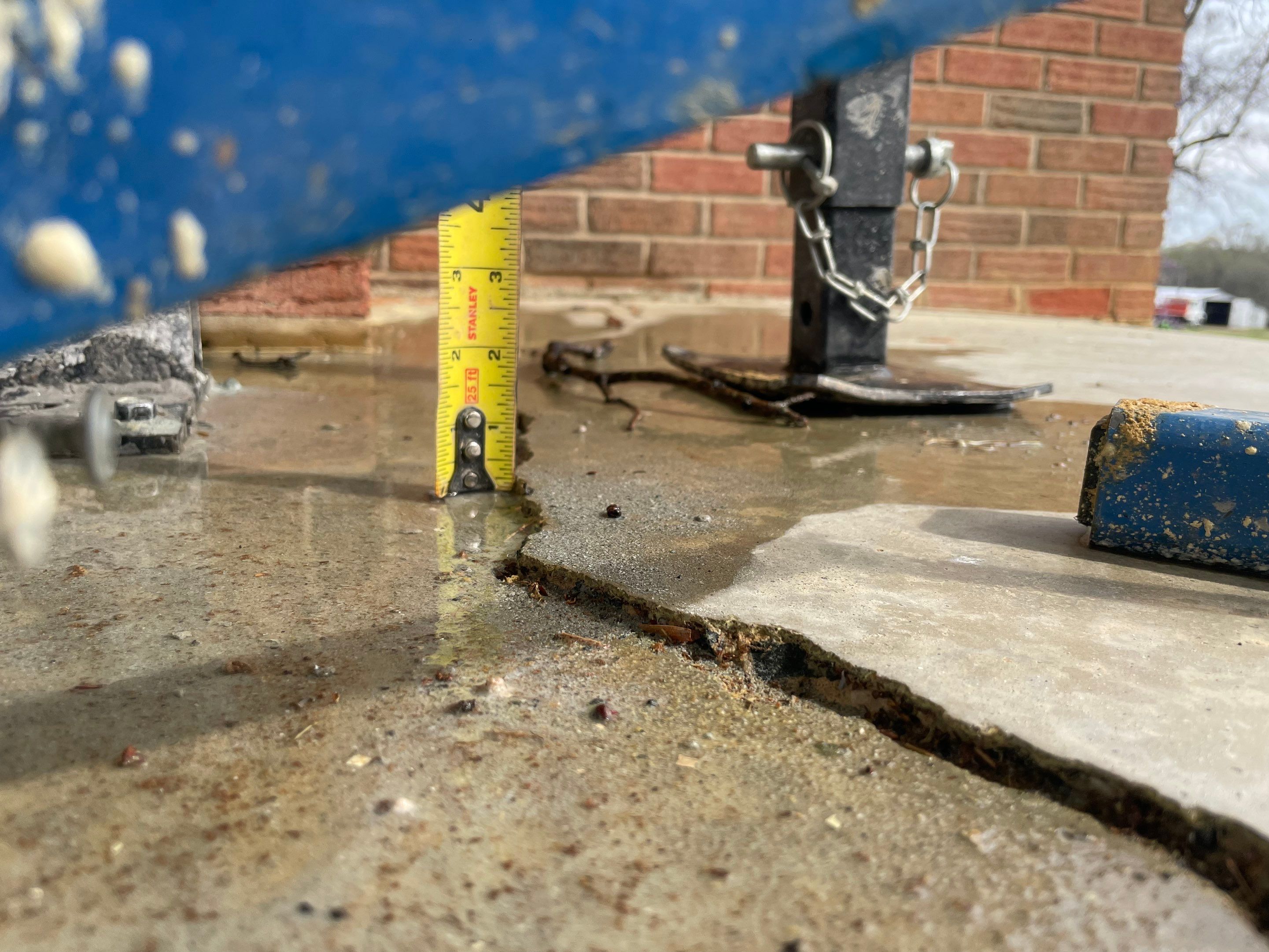
A crack across the floor with one side lower than the other. As long as the slab is still in one piece, both halves can be lifted back to level. Concrete crack repair closes wider gaps that won't lift back together. Cracks that have opened wide enough to see daylight need a repair before anything is raised. Cracks are sealed after the concrete is back at level, not before. Wide cracks usually mean the concrete moved further than the surface shows.
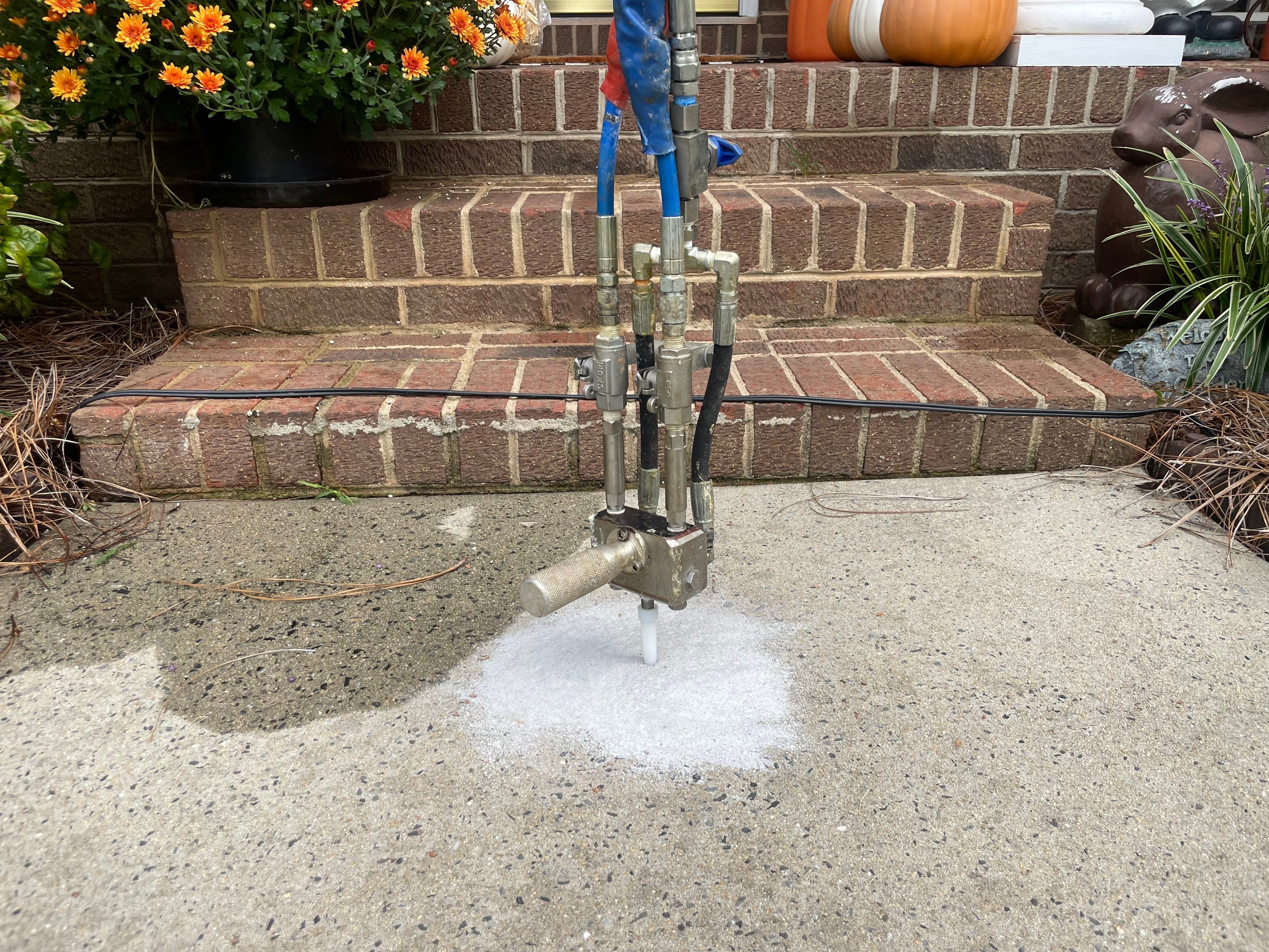
Garage floor leveling lifts a sunken garage slab back to grade without tearing it out. We drill small holes through the slab, inject expanding foam or cement-based mud underneath, and the floor rises back to level. Most jobs take two to four hours. You drive on it the same day. Polyurethane sets in about fifteen minutes and takes vehicle weight right away. The garage stays usable throughout. No resurfacing or coatings are involved.
Most garage floors don't need full replacement. If the slab is still in one piece, it can be lifted. A full 2-car garage replacement runs $4,000 to $8,000. A foam lift on the same slab usually runs $1,500 to $4,000 — about 50 to 75 percent less. We tell you straight which one your slab needs. A single low corner and a whole sunken bay are different jobs with different costs. We price the repair per section of concrete raised.
One dipped corner or one settled section of the bay. We target the void with foam, lift just that section back flush, and patch the holes. One section can be raised on its own without disturbing the rest of the garage. Costs scale with the area raised, not with the size of the garage.
The whole 1- or 2-car bay has dropped, usually pulling away from the back wall. We grid injection points across the floor and lift the slab evenly back to grade. Even pressure across the whole area is what keeps the concrete from cracking as it comes up.
The apron in front of the garage door has settled and left a step or trip lip. We lift the apron back flush with the garage slab so the door seals and wheels roll over clean. Driveway leveling covers the section just outside the apron. The apron carries the most traffic in the whole garage, so it settles first. That transition is where most cracks start. Water pooling there is the usual first sign.
The Process
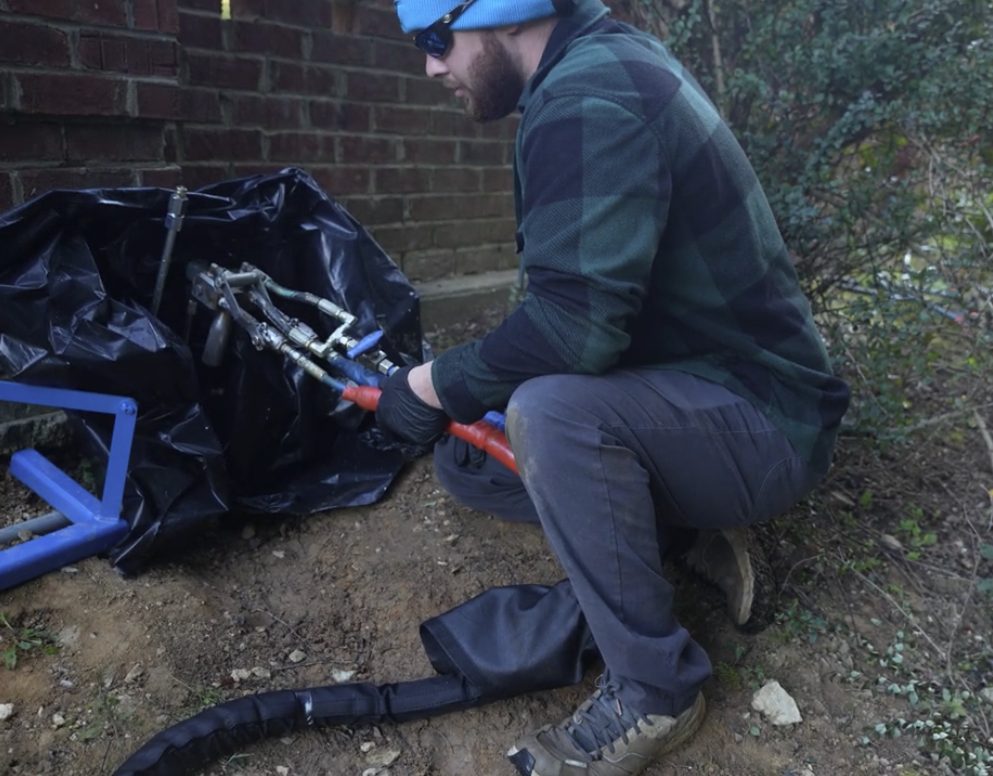
We come out and measure the dip with a level. We trace the cause — usually a downspout, a clay soil cycle, or compaction under where you park. You get a flat written price before we drill. We measure the low spots with a laser level so the drop is a number rather than an opinion. We check the slope across the whole garage floor, not just the low corner.
Small holes go through the slab in a grid across the dipped section. Foam holes are the size of a dime. Most garage jobs need four to eight holes total. Injection points are spaced to spread the load evenly under the concrete. Each one is patched flush with the surrounding concrete.
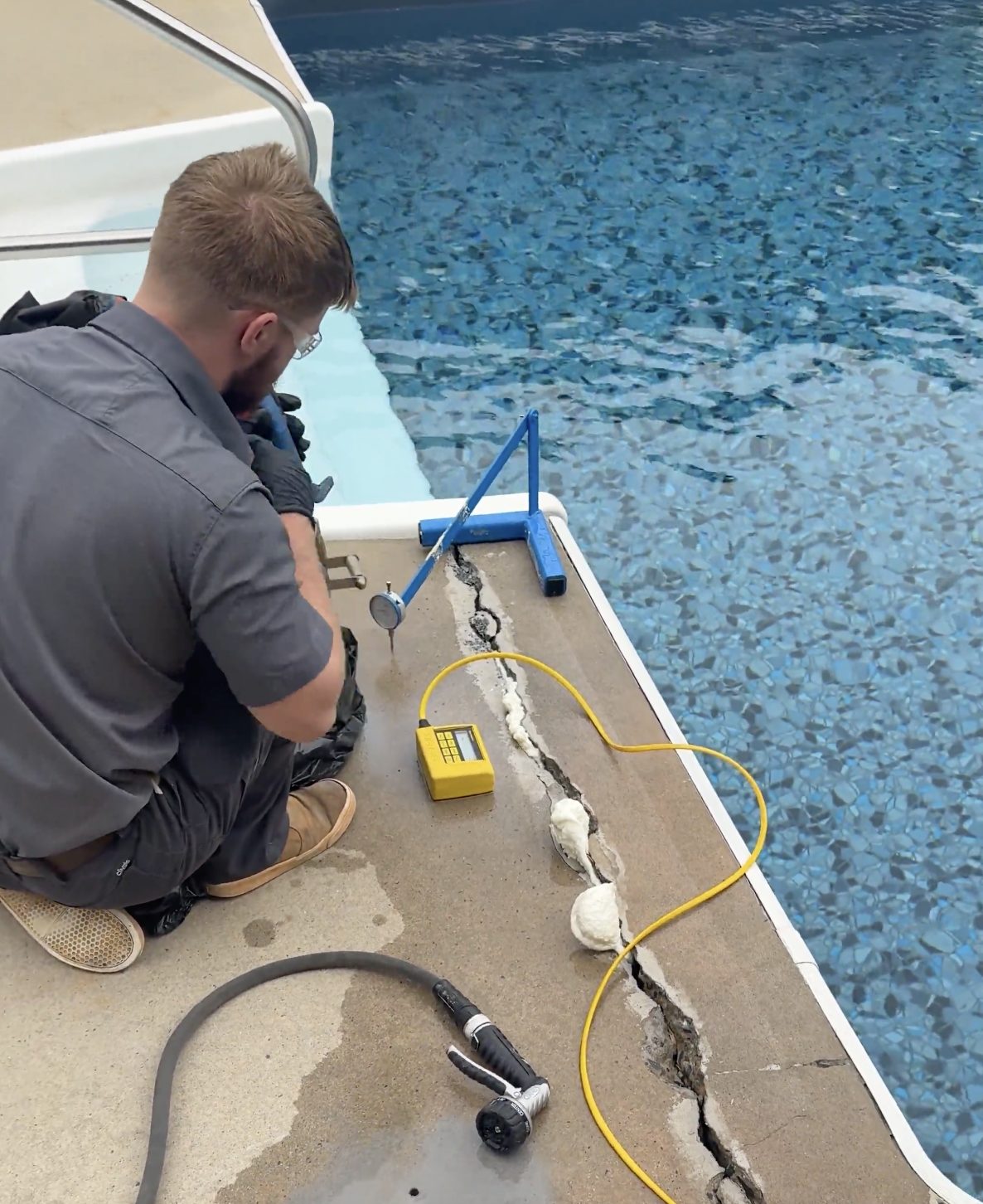
Foam expands underneath and lifts the slab in controlled bursts. We watch with a laser the whole time so the floor comes up flush and the garage door seals again at the bottom. Restoring the fall also stops water tracking back toward the house. A correct floor slope keeps water heading out rather than in.
We seal the holes with non-shrink patch and clean up. Foam cures in about 15 minutes. You can park your car back inside the same day. The surface is usable immediately once the patches are smoothed flush. No cleaning or surface preparation is needed afterwards. Most garages need one visit and no return trip.
We give you the price before we drill the first hole. Whatever number we quote is the number you pay. No change orders mid-job, no surprise charges after the slab is up. The cost is fixed before any work begins and nothing is added afterwards.
We use both foam and mud, and we tell you which one fits your garage. Foam lasts 20+ years, won't wash out from snowmelt or hose-downs, and you drive on it the same day. Mud is cheaper and good for 2 to 5 years. We lay it out — your call. Concrete over poorly compacted fill will keep dropping until the void beneath it is filled. Filling the void underneath is what makes the repair last.
Most garage floor lifts are done in a half day. The slab is drivable about an hour after we finish. No tear-out, no week of waiting on new concrete to cure, no losing your garage to a contractor for three days. Most garages are back in normal use the same afternoon.
Most garage floor lifts run $700 to $4,000. A single dipped section is usually $700 to $1,500. A full 2-car bay runs $1,500 to $4,000 with foam, or $1,250 to $2,700 with mudjacking. Replacement runs $4,000 to $8,000 — leveling saves about 50 to 75 percent. Concrete repair of this kind keeps the surface you already paid for. Replacing a garage floor also means losing the garage for the better part of a week.
Foam injection lasts 20 years or more because it's waterproof and won't wash out under snowmelt or wash water. Mudjacking lasts 2 to 5 years on average. The lift only holds long-term if the soil cause — usually a downspout or drainage issue — also gets fixed. Regrading the ground outside is often the cheaper half of the repair. A repair without fixing the cause is money wasted.
Yes, in most cases. As long as the slab is still in one piece, it can be lifted back to grade with foam or mud injection. Replacement is only needed when the slab is broken into pieces, has settled more than 2 inches, or has cracks across more than a third of the floor. Beyond that point the concrete is usually too broken to raise, and we say so. Below that threshold the concrete raises cleanly.
Most garage floor jobs are done in 2 to 4 hours. A single section takes about an hour. A full 2-car bay runs 3 to 5 hours. Foam cures in 15 minutes — you can drive on it the same day. Mudjacking jobs need 24 to 72 hours before vehicles go back on. Polyurethane is the faster option for exactly that reason.
The soil under the slab fails. Common causes are downspouts dumping water that washes out the dirt at the corner, clay soil shrinking in dry months, the same parking spot getting loaded by the car for years, and poor compaction when the floor was first poured. Water finding its way under the garage is the other common cause. Both leave the same void. Foundation movement alongside the garage shows up in the concrete first.
Rapid Concrete Leveling provides garage floor leveling across our service area. Click your city for local crew details.